
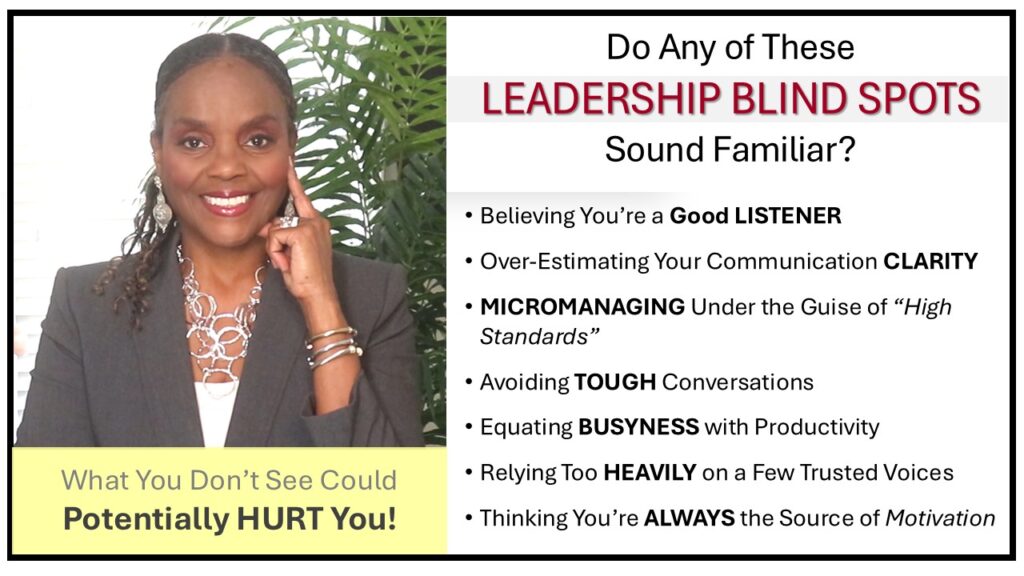
What You Don’t See Can Potentially Tarnish Your Reputation
Every leader has them. Not weaknesses. Not character flaws. BLIND SPOTS. The habits and assumptions that feel like leadership… but quietly erode trust, performance, and morale.
The danger isn’t having blind spots. The danger is refusing to look for them. So, here are seven leadership blind spots that show up more often than we’d like to admit, AND how to overcome them:
1. Believing You’re a Good Listener (When You’re Not) – You may believe you’re present and attentive, but if you’re forming your next response or subtly dismissing input, your team feels it. When people feel unheard, they disengage and withhold feedback. The solution is active listening: reflect back what you hear before responding, ask clarifying questions, and schedule check-ins where your only agenda is to listen. Listening isn’t passive—it’s one of the most powerful tools of influence.
2. Overestimating Your Communication Clarity – You said it once, so you assume it was understood. But miscommunication creates confusion, frustration, and costly execution errors. Strong leaders use repetition strategically—say it, write it, and say it again. Ask team members to “teach back” key points to confirm understanding, and normalize questions. Clear is kind. Assume nothing—verify everything.
3. Micromanaging Under the Guise of “High Standards” – Staying deeply involved can feel like commitment, but it often erodes trust and initiative. When leaders control every detail, they signal a lack of confidence in their team. Instead, focus on outcomes rather than every input. Delegate authority along with tasks, and celebrate progress—not just perfection. Trust is built when people are allowed to try, learn, and grow.
4. Avoiding Tough Conversations – You may think you’re protecting morale by avoiding conflict, but unresolved issues fester. Accountability weakens, performance declines, and top performers grow resentful. Instead, reframe feedback as an act of respect. Address issues early and directly. Focus on facts and behaviors, not personalities. Leadership requires the courage to address what others avoid.
5. Equating Busyness with Productivity – Rewarding effort and long hours instead of real impact creates a culture of exhaustion and poor prioritization. Teams feel pressure to look busy rather than work smart. Measure results, not hours. Promote strategic rest and focused execution. Being busy is not the same as being effective.
6. Relying Too Heavily on a Few Trusted Voices – Sticking to your inner circle may feel efficient, but it limits innovation and silences diverse perspectives. Others begin to feel invisible or undervalued. Rotate meeting participation, actively solicit input across levels, and recognize unique contributions publicly. Leadership is about amplifying all voices—not just the most familiar ones.
7. Thinking You’re Always the Source of Motivation – Believing it’s your job to constantly inspire your team can leave you drained and limit their ownership. True motivation is internal. Help employees connect their work to a larger mission. Give them autonomy in how they execute their roles. Support their growth and development. Great leaders remove barriers so motivation can thrive.
My Final Thought – Leadership blind spots aren’t flaws; they’re opportunities. The most admired leaders aren’t perfect; they’re reflective. They ask: What might I be missing? How am I showing up? Where can I lead with more intention?
Most of all, leadership isn’t about being right all the time. It’s about being brave enough to change when it matters most.
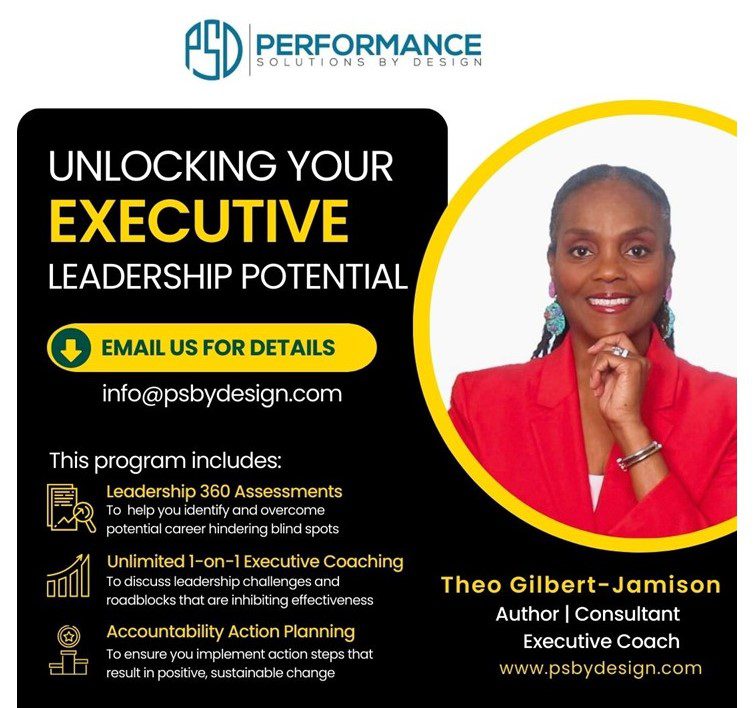
Need an engaging, high-energy speaker for an upcoming Leadership Event or All Employee Meeting? Theo Gilbert-Jamison is an Author, Keynote Speaker, and Executive Coach. Her speaking style is considered a captivating blend of practical strategy and compelling storytelling. She delivers clear, actionable insights coupled with proven best practices that elevate both knowledge and capability, while anchoring each concept in real-world experiences that make the learning relatable and memorable. Theo’s presentations go beyond inspiration, equipping each audience with concrete tools, reflection exercises, and action steps designed to drive immediate application and sustainable impact. For speaking inquiries, contact us at info@psbydesign.com. It would be our pleasure to assist!